Photo of the week
-
This weekends extra.
Squadron commander of the 150th Bomber Aviation Regiment, Major Ilya Fedorovich Presnyakov , with crew members at the airfield near a Pe-2 bomber with the inscription “Forward to the West!”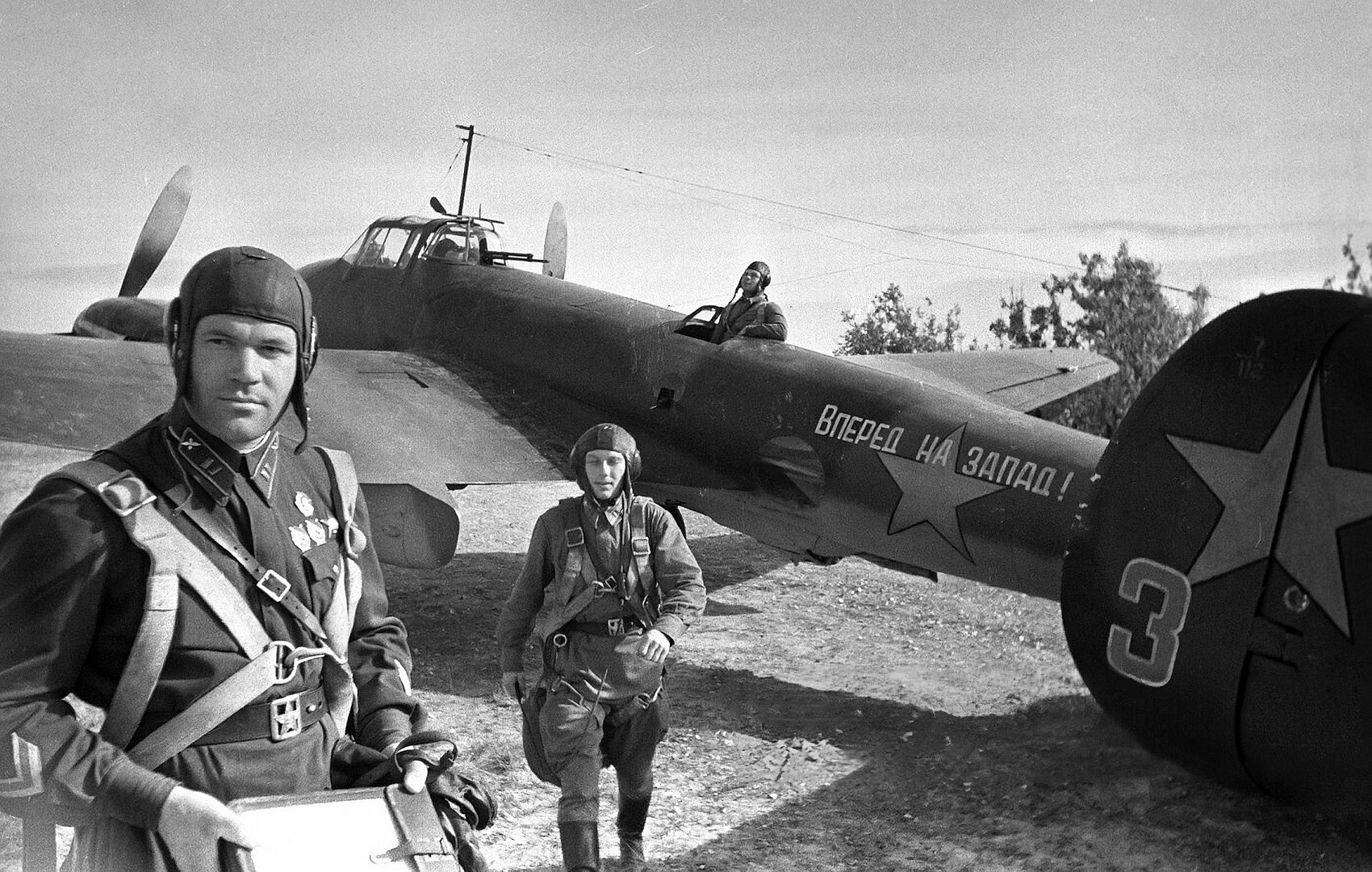
-
This midweeks photo.
"USAF H-19 helicopter, 'Hop-A-Long' and 'Whirl-O-Way,' parked on the airfield at Goose Bay, Labrador, after completing the second leg of their trans-Atlantic flight from Westover, Mass., to Wiesbaden, Germany. In the foreground is the Military Air Transport Services' Douglas C-54 escort plane which carriers mechanics, photographers, and equipment needed for the long hop."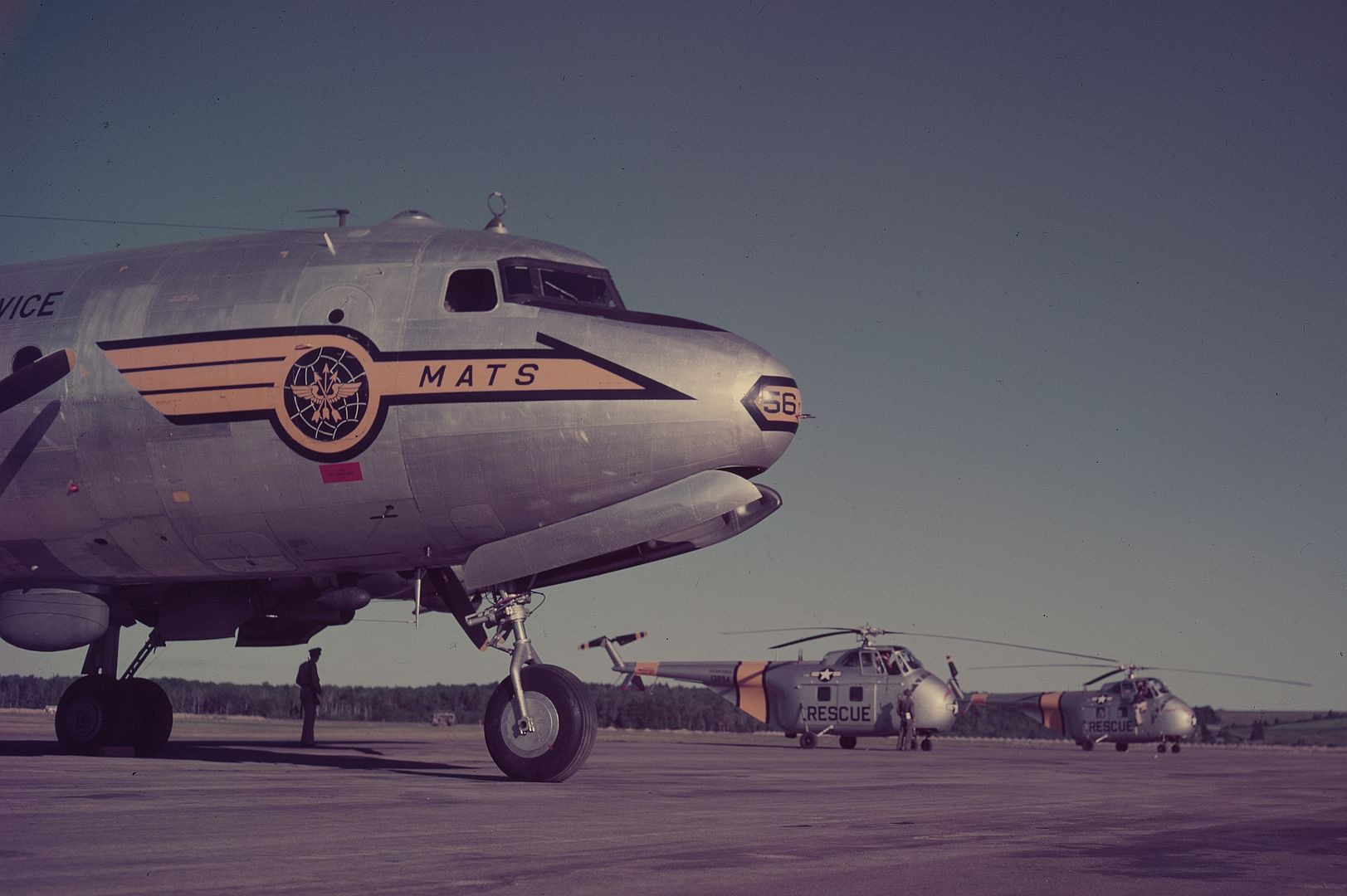
The Historic Flight (1952)
In July 1952, these two aircraft embarked on a pioneering journey from Westover Air Force Base in Massachusetts to Wiesbaden, West Germany.
The Aircraft: The helicopters were brand new H-19As stripped of non-essential equipment, such as cabin heaters, and fitted with extra fuel tanks to extend their range.
The Route: The mission, designated "Operation Hop-A-Long," covered approximately 3,410 miles in five distinct legs, including stops in Labrador, Greenland, Iceland, and Scotland.
The Pilots: "Hop-A-Long" was piloted by Captain Vincent H. McGovern, and "Whirl-O-Way" was piloted by 1st Lt. Harold W. Moore.
Key Milestones
Low-Altitude Flying: During the final leg from Iceland to Scotland, the helicopters sometimes flew so low they had to dodge icebergs in the Atlantic.
Arrival: They reached Prestwick, Scotland, on July 31, 1952, after a total flying time of 42 hours and 25 minutes. -
-
This weekends extra.
Anthony Fokker (in the cockpit) demonstrates the Fokker F.I triplane behind the front. This was a pre-production example of the aircraft that would later be designated Dr.I. The second person to the right of the aircraft is Manfred von Richthofen.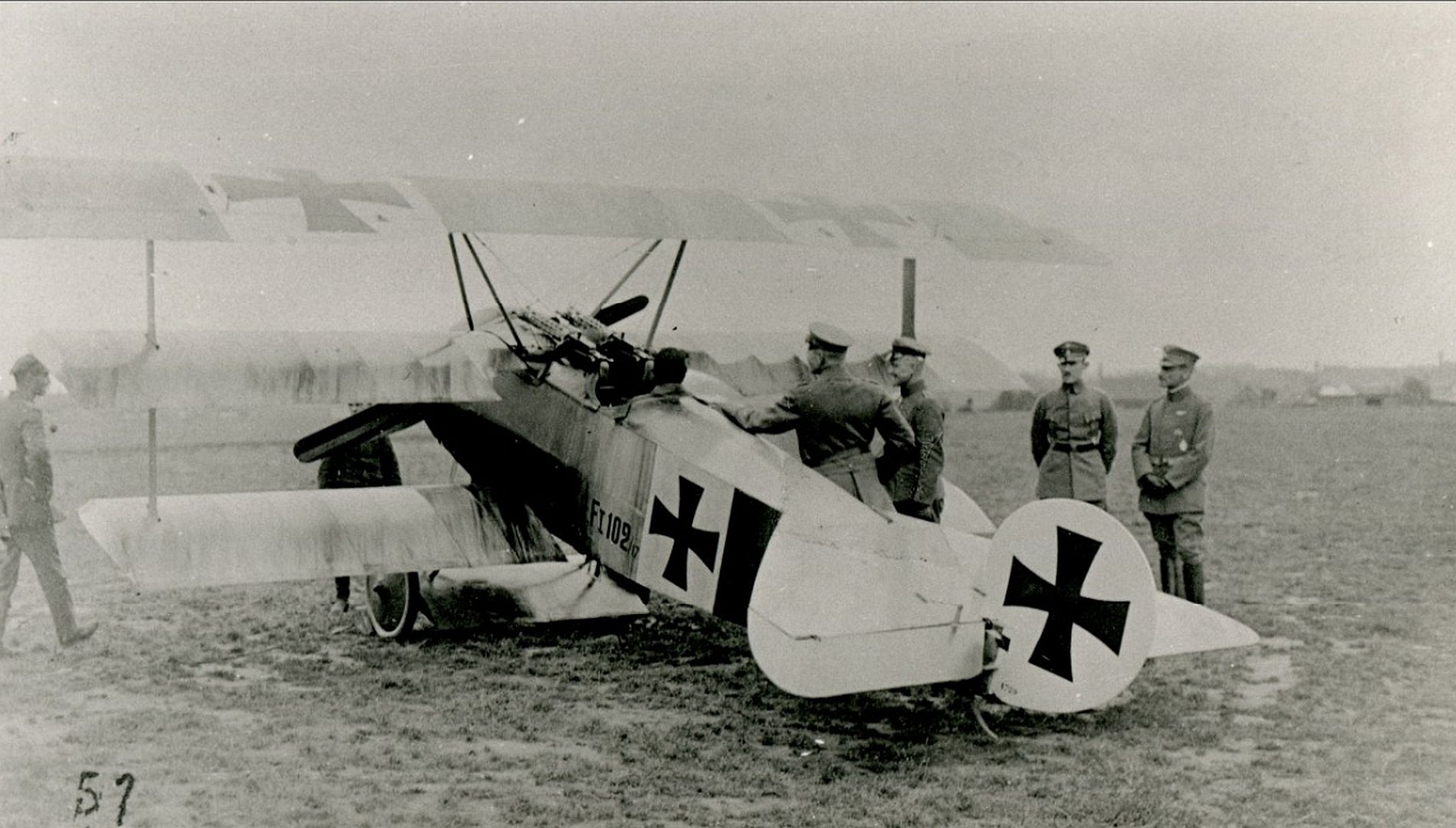
-
This midweeks photo.
A fine study of a 35th Photographic Reconnaissance Squadron, “G” Flight Lockheed F-5E Photo Lightning at Yunnanyi, China. George Flight deployed to Yunnanyi in mid-September, 1944, and in late October made a short move over to nearby Beiting Airfield, perhaps where this picture was taken. It shows the distinctive original Redhawk emblem on the nose, a mountain symbol for the flight from India over “The Hump” (Himalayan Mountains) into China and 32 photo recon mission symbols (the number of which suggest this photo was possibly taken in 1945 before the flight’s next move in February) and the three-digit aircraft number, 810, assigned to this aircraft. The aircraft was produced as Lockheed P-38J-15-LO Lightning fighter, serial number 43-28610 and then converted at Dallas, Texas into an F-5E-2-LO photographic reconnaissance version of the famous fighter plane before being shipped to India, reassembled and flown over the Hump to China in September, 1944. It flew through the squadron’s time in China, with a last known photo recon mission recorded on July 28, 1945. (142nd Wing History Archive)
-
This weekends photos.
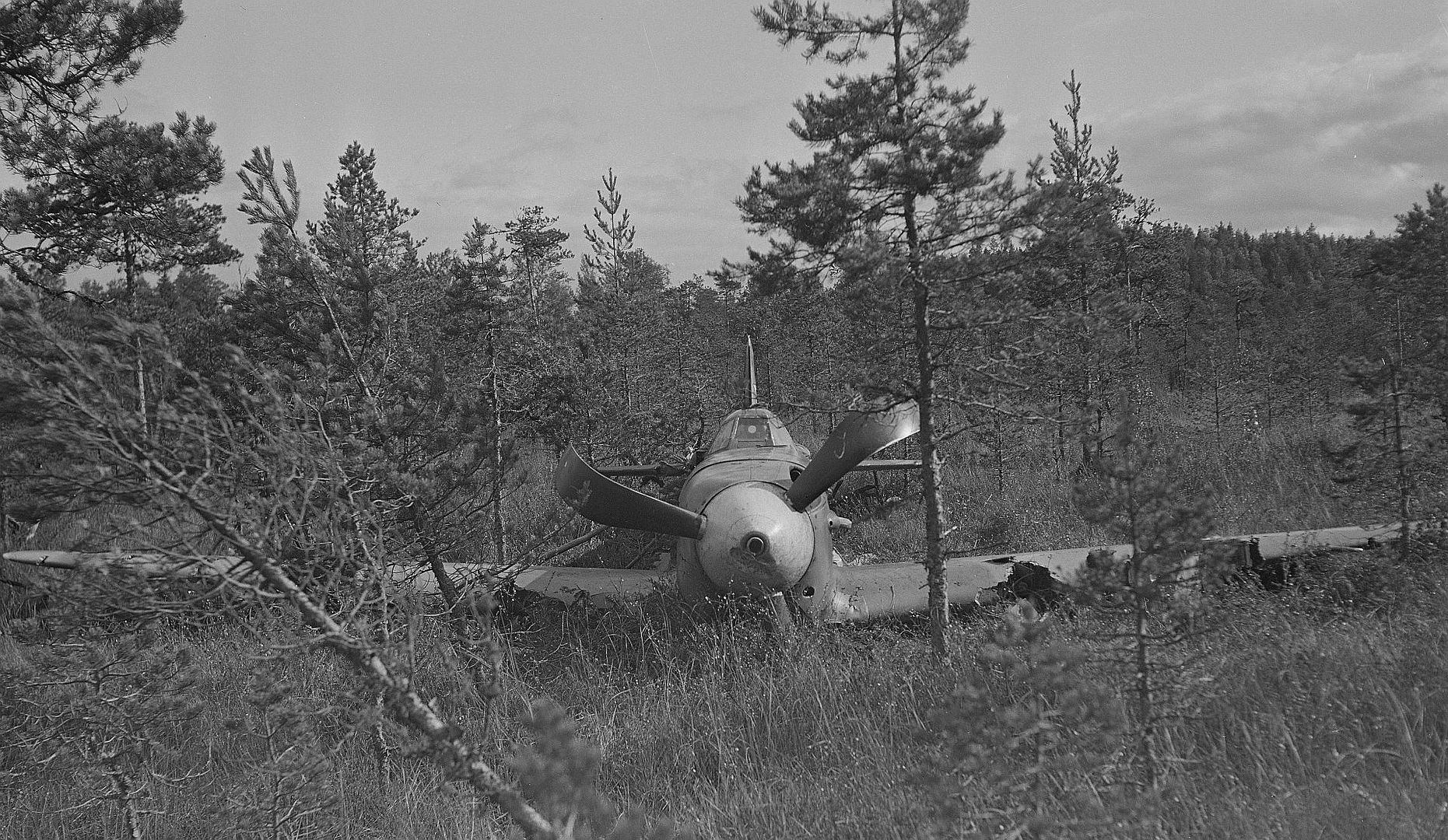
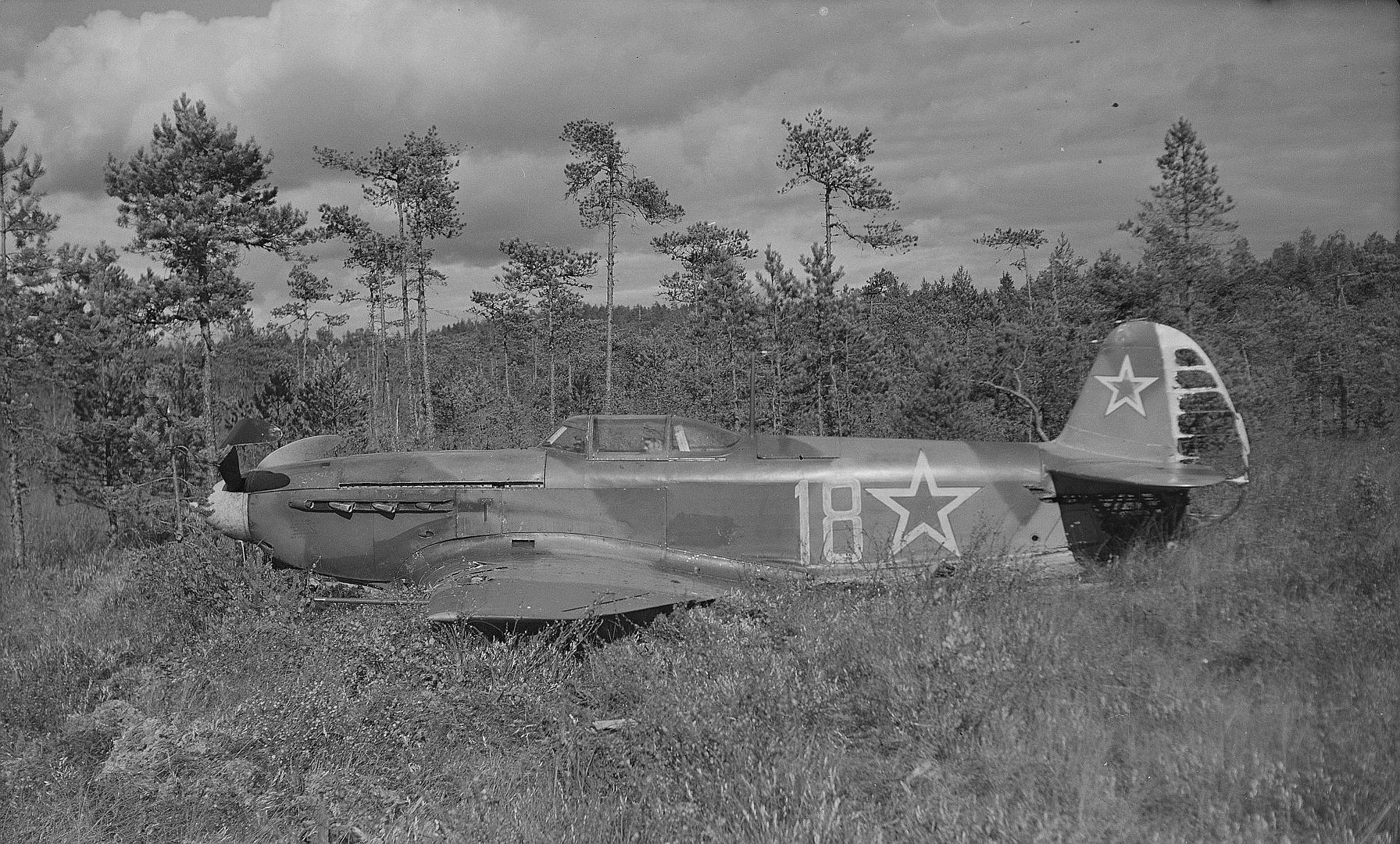
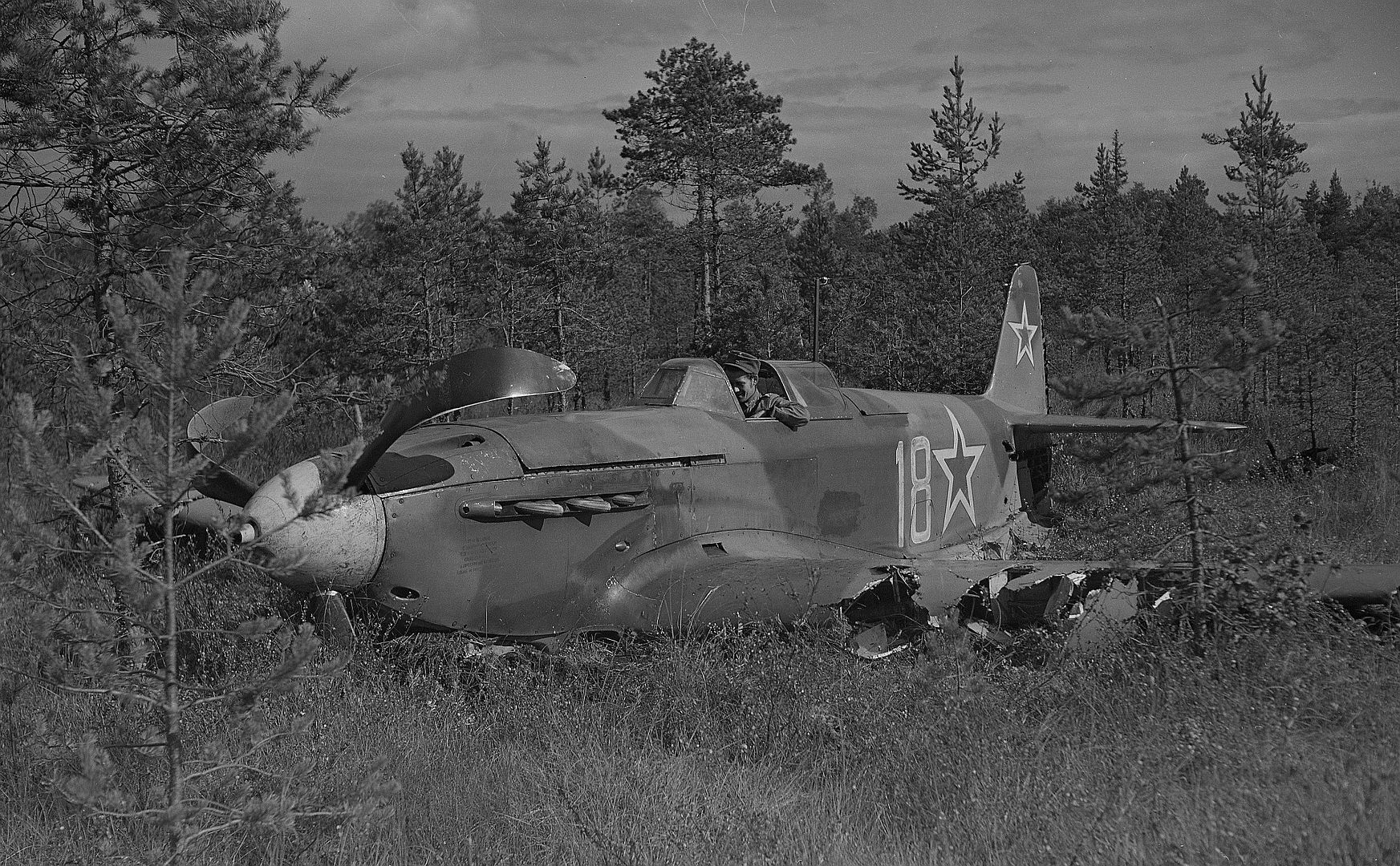
Finnish soldiers pose on the wing of a Soviet Yak-9 fighter plane that made an emergency landing in the Khovinkul area (now the village of Petrovskoye in the Vsevolozhsky District of the Leningrad Region) on August 30, 1944. The captain is holding a hunting rifle. The aircraft belonged to the 29th Guards Fighter Aviation Regiment of the 275th Fighter Aviation Division of the 13th Air Army of the Leningrad Front. It was flown from the Manisiemi airfield to the Commandant's airfield by Guard Lieutenant Mikhail Matveyevich Volkov, with Guard Junior Lieutenant Vladimir Matveyevich Titorenko as a passenger. Both pilots were taken prisoner but were released in September.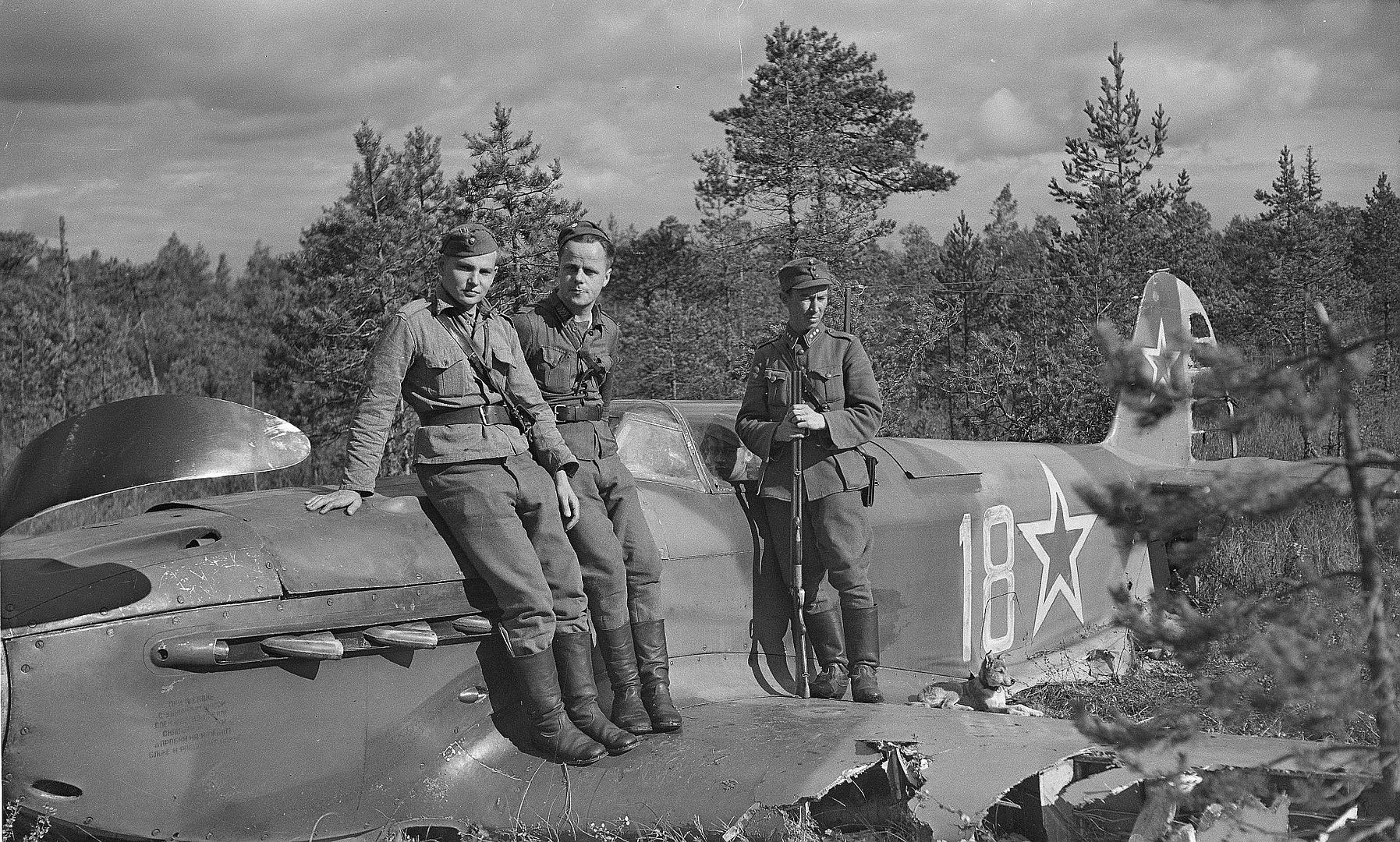

-
This weekends extra.
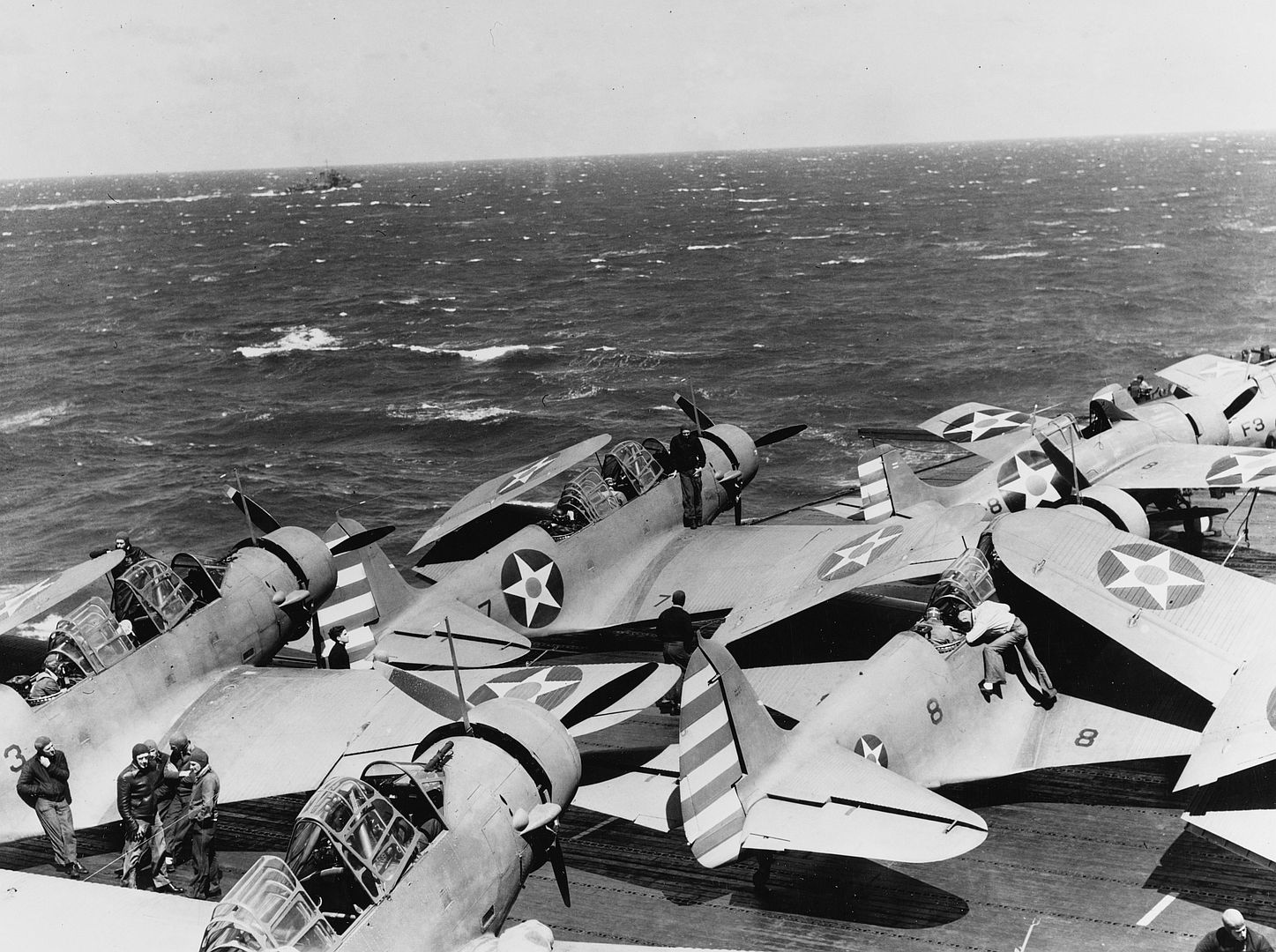
And a couple of shots of the flight deck of USS ENTERPRISE (CV-6) taken April 1942.Note variations in aircraft fuselage markings and national insignia sizes.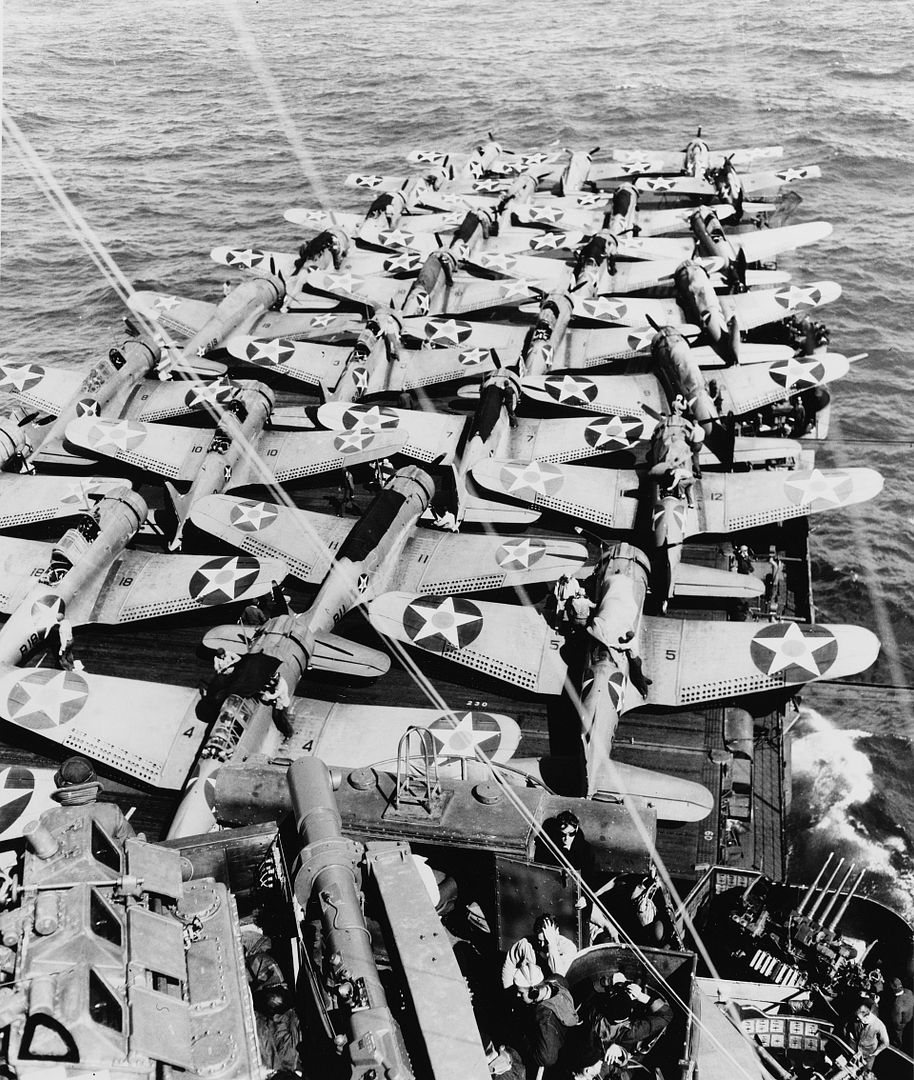
-
This midweeks photos.
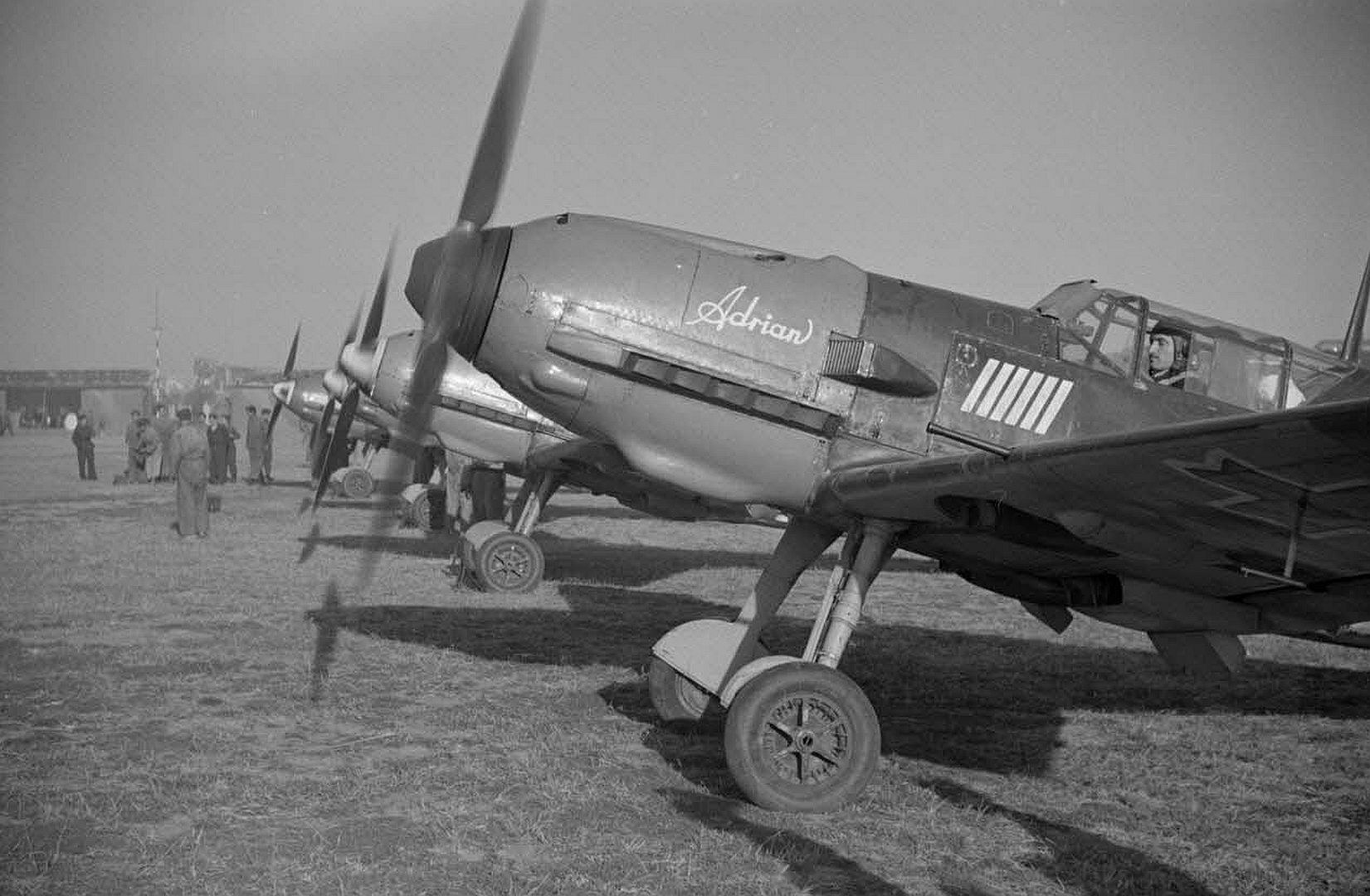
Messerschmitt Bf-109E fighter planes used by Romanian pilots of the 9th Fighter Squadron (Grupul 9).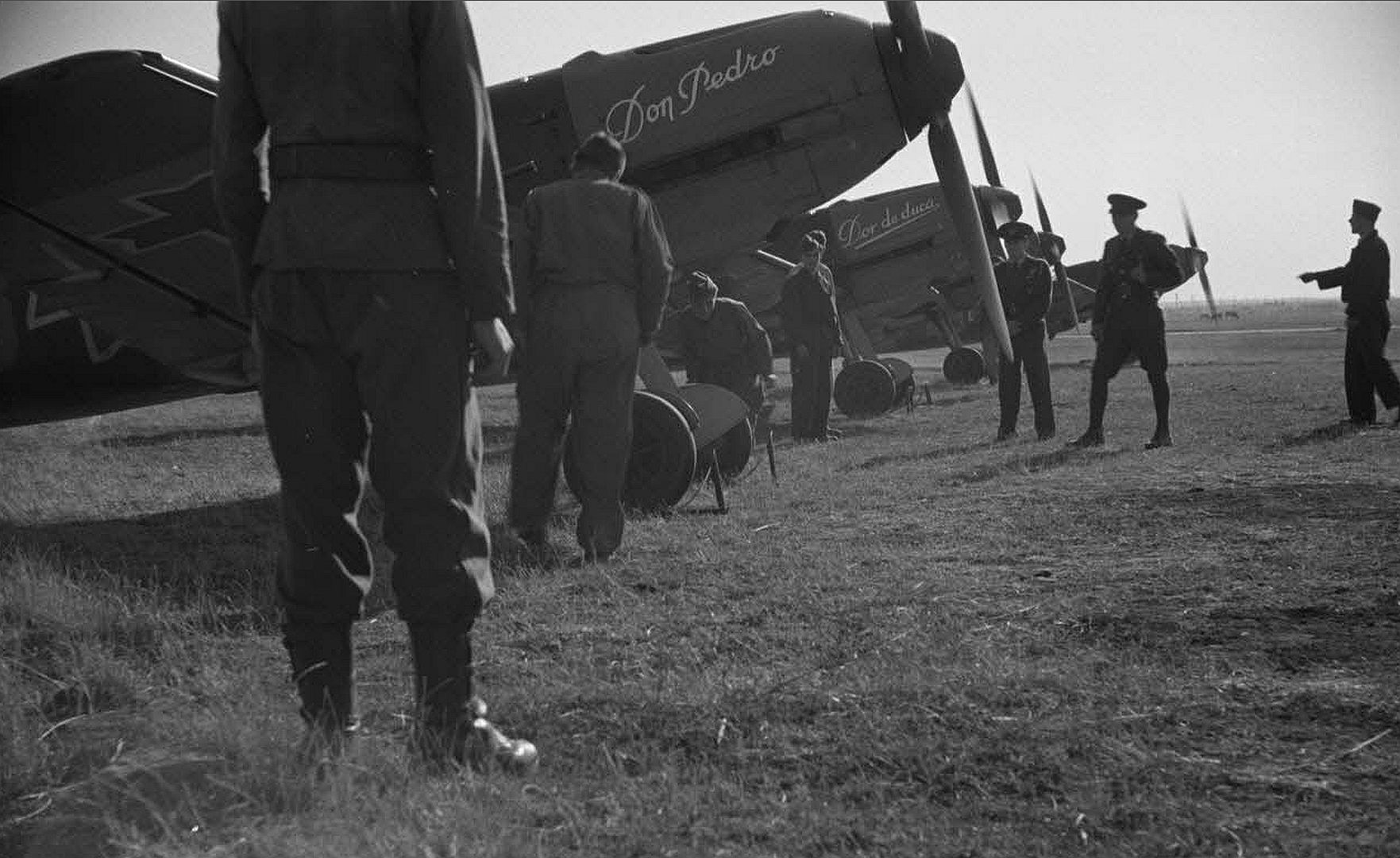
Below Pilot Stefan Greceanu displaying his 8 aerial victories..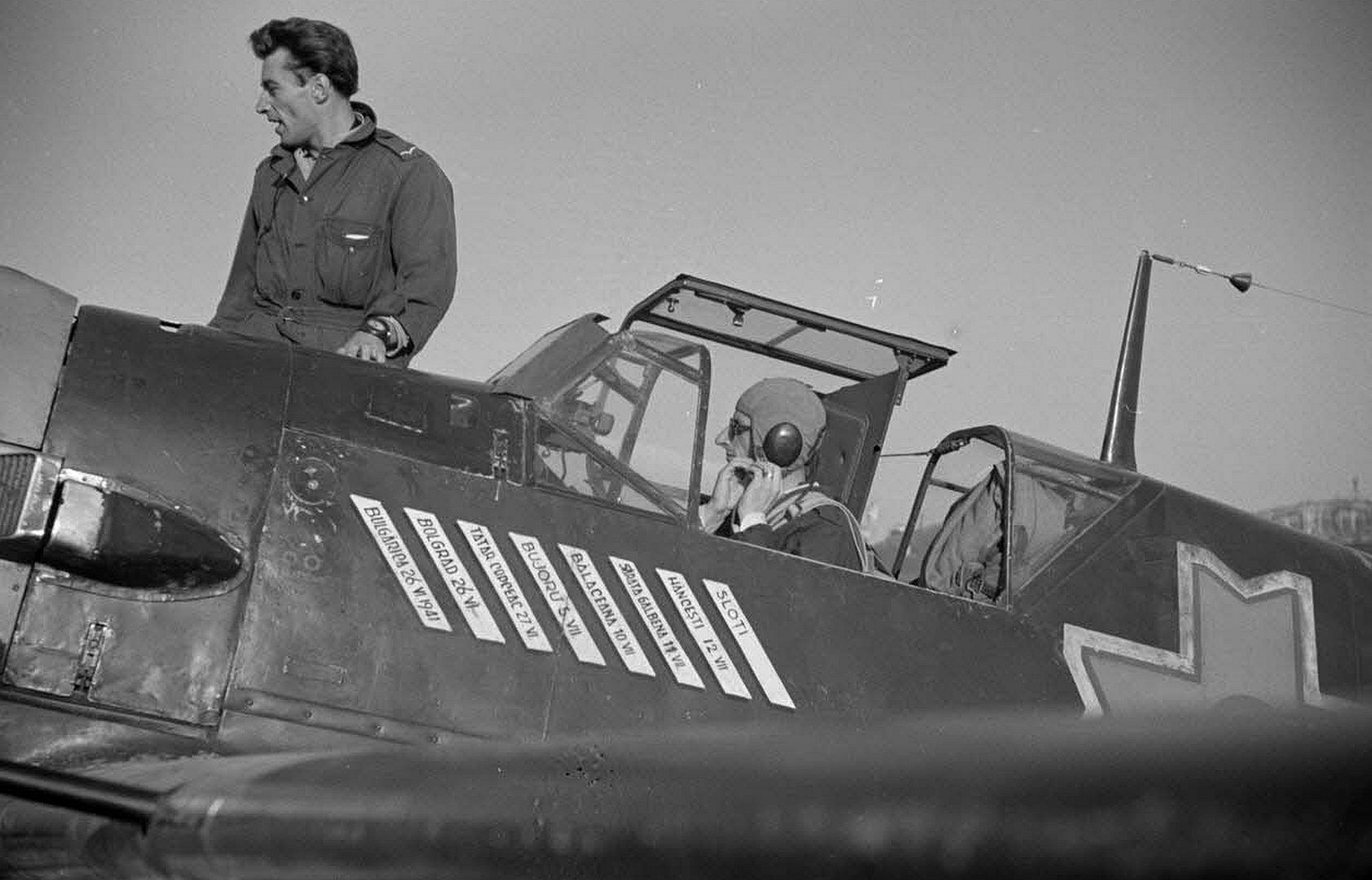
-
This weekends photo.
Ground crewmen using a trolley-accumulator start up a Hawker Hurricane Mark I of No. 501 Squadron RAF at Betheniville, in northeastern France.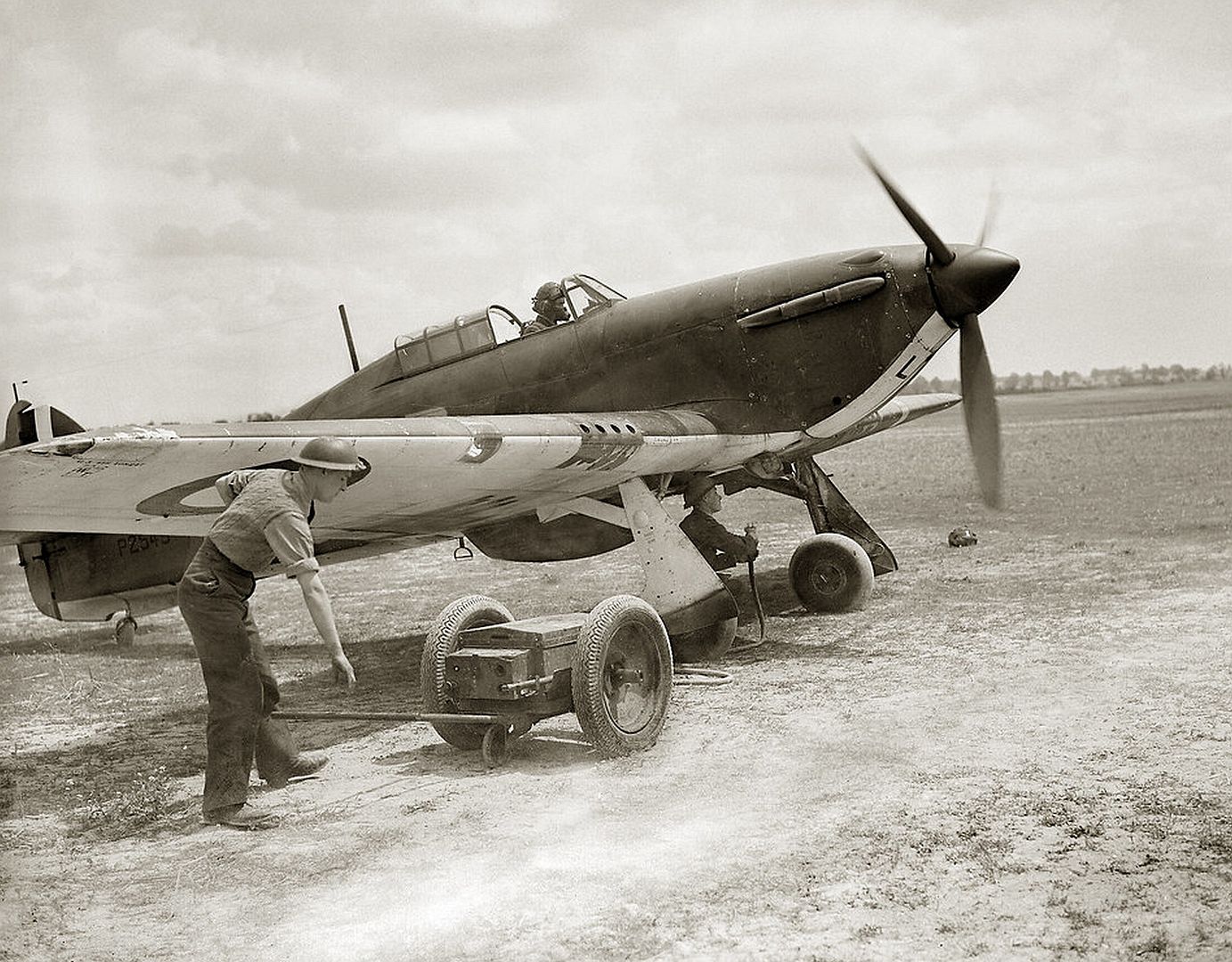
No.501 ‘County of Gloucester’ Squadron was a fighter squadron that was originally formed as part of the Special Reserve in 1929, and that took part in the Battle of Britain, the period of offensive sweeps over occupied Europe and the anti V-1 campaign.
The squadron was formed on 14 June 1929 as No.501 ‘City of Bristol’ Squadron, and was equipped with D.H.9A day bombers. The squadron remained a day bomber unit for most of the 1930s, converted to the Wapiti, Wallace, Hart and Hind in turn. In May 1936 the squadron became part of the Auxiliary Air Force, and its name was changed to ‘County of Gloucester’ Squadron to more accurately reflect the origins of its part time personnel.
At the end of 1938 the squadron was converted into a single seat fighter squadron, receiving its Hawker Hurricanes in March 1939. After the outbreak of the Second World War the squadron remained in Britain, flying defensive patrols. After the start of the German offensive in the west in May 1940 the squadron joined the AASF in France, and took part in the retreat across France to Brittany, ending up at Dinard from 11-18 June, before retreating to Jersey and then back to the south of England.
No.501 Squadron was based in the south of England throughout the Battle of Britain. It was at Middle Wallop (No.10 Group) for most of the initial period of convoy battles, but moved to Gravesend, a satellite station of Biggin Hill on 25 July. The squadron remained at Gravesend throughout the hardest fighting of the battle. On 15 August, one of the hardest days of the battle, the squadron was one of four that disrupted the first German attack of the battle. It remained at Gravesend during the assault on Fighter Command. On 10 September, just after the start of the daylight attack on London, the squadron finally moved, but only to the Sector Station at Kenley, where it remained until mid-December.
The squadron began flying offensive sweeps over France early in 1941, still using its Hurricanes. Spitfires arrived in April 1941, and were used for offensive sweeps for the rest of 1941 and most of 1942. The squadron moved to Northern Ireland for a rest from October 1942 until April 1943, before returning to the south of England, where it spent the rest of the war.
In July 1944 the squadron converted to the Hawker Tempest. In August 1944 pilots from the Fighter Interception Unit joined the squadron. This unit had been involved in developing methods for catching V-1 flying bombs at night, and the squadron took part in the anti V-1 campaign until September, when the Allied armies captured the last V-1 launching areas.
The Germans responded by launching V-1s from bombers operating over the North Sea. No.501 Squadron moved to East Anglia, where it flew a mix of defensive patrols aimed at these bombers and escort missions for Bomber Command’s daylight bombers. By March 1945 the squadron had shot down at least 88 V-1s.
The squadron was disbanded on 20 April 1945, but was reformed as part of the post-war Auxiliary Air Force in May 1946, still as a fighter squadron. -
This midweeks photos.
WB188 is the P.1067 Hunter prototype. Neville Duke flying and Cyril Peckham taking these exquisite shots.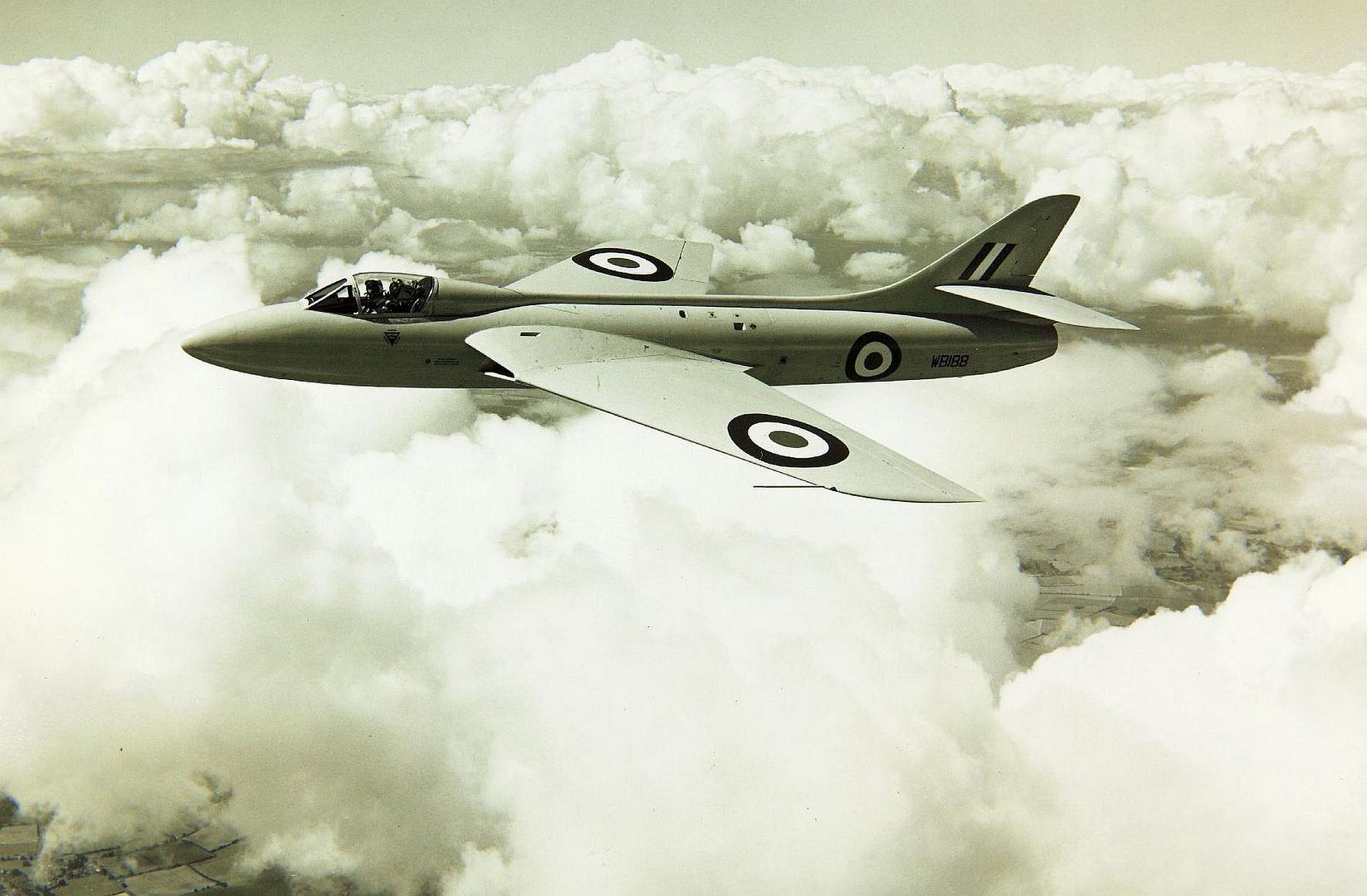
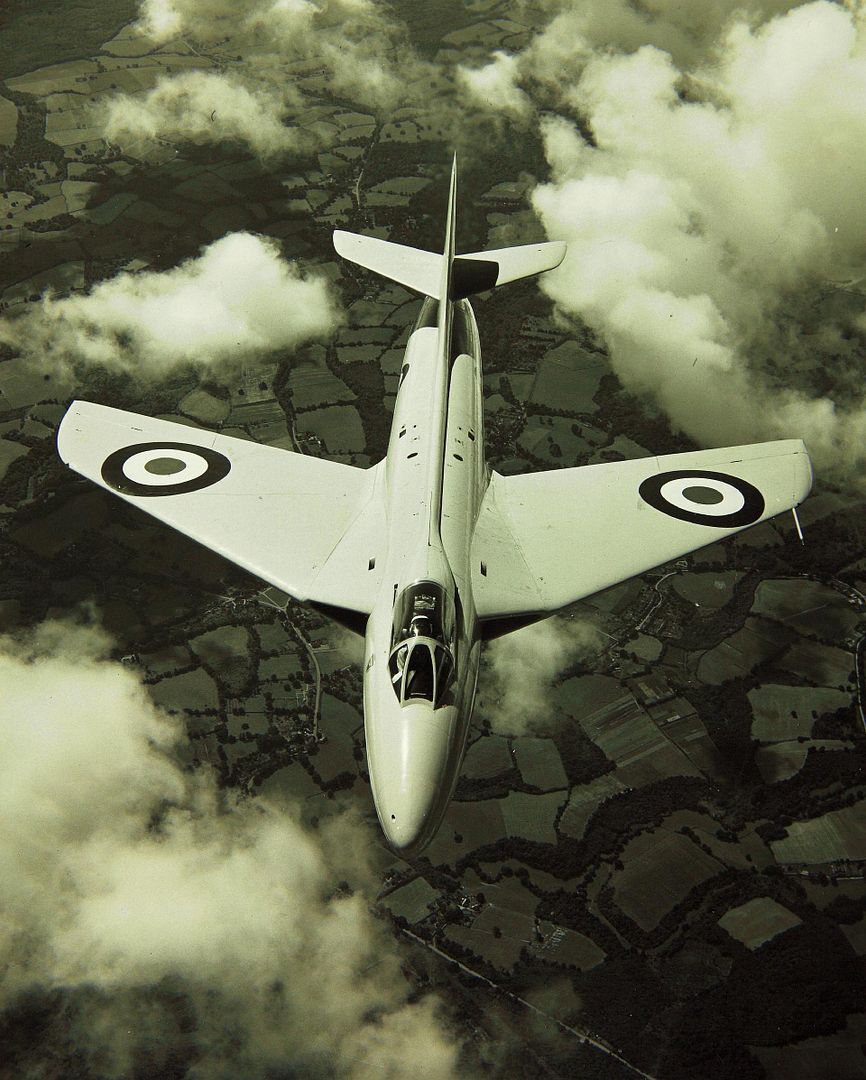

Cyril Peckham was a commercial artist and photographer who came to prominence working for Hawker Aircraft Ltd. He also designed a camera, the Peckham Wray, used by the Royal Navy.
Cyril worked for Philips and Powis before joining General Aircraft. He moved to Hawker in 1942, where he photographed many famous aircraft, from the Hurricane to the Hunter. After 12 years at the company, he became a freelance before joining the GQ Parachute Company. In 1971 Cyril retired to the Isle of Wight where he returned to painting.