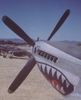
Photo of the week
-
This weekends extra.
The BFW M.35 (specifically registered as D-2643) was a high-performance, two-seat sport and aerobatic aircraft designed in 1933 . Built by Bayerische Flugzeugwerke (BFW), registration D-2643 was among the very first M.35a models produced, featuring a 7-cylinder radial engine .
It was the last of a line designed by Willy Messerschmitt. -
This midweeks photos.
And a couple of cracking shots of KLM Douglas DC-3's taken in 1936 at Schiphol.

In 1936, KLM Royal Dutch Airlines received its first DC-3, which replaced the DC-2 in service from Amsterdam via Batavia (now Jakarta) to Sydney, by far the world's longest scheduled route at the time. In total, KLM bought 23 DC-3s before the war broke out in Europe. -
This weekends photo.
Vickers Wellington GR Mk XIV maritime patrol aircraft at RAF Chivenor.
Vickers Wellington GR Mk XIV MP774 was a specific twin-engined maritime patrol and anti-submarine aircraft of the Royal Air Force. Operating with No. 179 Squadron, it was stationed at RAF Chivenor in Devon, England. It is most famously documented in a series of iconic World War II archival photographs, primarily conducting General Reconnaissance (GR) duties to hunt German U-boats.The GR Mk. XIV (the ultimate maritime patrol version of the Wellington, equipped with a "chin" radome housing ASV Mk. III radar for surface vessel detection) -
This weekends extra.
And some shots of Finnish Dornier Do 17Zs.


In late 1941, the Finnish Air Force was gifted a mixture of Do 17Z variants: three Z-1s, three Z-2s, and nine Z-3s. By 1942, these aircraft were deemed too slow and inadequately armed for daylight operations. Despite this, the Finns successfully deployed them for night bombing missions. Over the course of the war, 10 of the planes were lost to enemy action, accidents, and wear. The surviving five aircraft remained in inventory and were not scrapped until 1952. -
This midweeks photo.
B-29 Superfortress bomber No. 44-70136 damaged on the ground, taken near Konan after being attacked by Russian Yak-9 fighters.. The aircraft belonged to the 500th Bomb Group of the 73rd Bomb Wing..
The bomber is historically notable for its controversial loss: on August 29, 1945—after the formal surrender of Japan but while on a mercy mission to drop supplies to Allied POWs in North Korea—it was intercepted and shot down by Soviet aircraft. It is widely considered to be the last B-29 shot down in World War II and the first one lost during the Cold War.
Details here --- https://pacificwrecks.com/aircraft/b-29/44-70136.html -
This weekends photo.
Pilots of the 9th Squadron, 3rd Fighter Wing (9./JG3) of the Luftwaffe, with a Messerschmitt Bf.109F-4 fighter at Straubing airfield. *Oberfeldwebel* Eberhard von Boremski is standing on the fighter's wing. In the foreground on the left is *Oberfeldwebel* Georg Schentke.
Eberhard von Boremski (24 September 1914 – 16 December 1963) was a fighter pilot in the Luftwaffe of Nazi Germany during World War II. A flying ace, he was credited with 104 aerial victories—that is, 104 aerial combat encounters resulting in the destruction of the enemy aircraft—claimed in roughly 630 combat missions. Boremski was a recipient of the Knight's Cross of the Iron Cross. He was killed in an accident in Hamburg on 16 December 1963.
Georg 'Peterle' Schentke (23 November 1919 – 25 December 1942) was a Luftwaffe ace and recipient of the Knight's Cross of the Iron Cross during World War II. The Knight's Cross of the Iron Cross, and its variants were the highest awards in the military and paramilitary forces of Nazi Germany during World War II.
In November 1942, Schentke returned to the Eastern Front and was assigned to the 2. Staffel of JG 3.[14] At the time the Staffel was under the command of Oberleutnant Detlev Rohwer. In December, Schentke volunteered for the Platzschutzstaffel (airfield defence squadron) of the Pitomnik Airfield. The Staffel, largely made up from volunteers from I. and II. Gruppe of JG 3, was responsible for providing fighter escort to Junkers Ju 52 transport aircraft and Heinkel He 111 bombers shuttling supplies for the encircled German forces fighting in the Battle of Stalingrad. On 12 December 1942, the German LVII Panzer Corps of the 4th Panzer Army began its north-eastward drive from Kotelnikovo toward German forces trapped in the Stalingrad pocket. That day, JG 3 supported the attack in the combat area south of Stalingrad. During these missions, Schentke claimed six aerial victories, making him an "ace-in-a-day" for the second time.
On 25 December 1942, Schentke claimed an Ilyushin Il-2 ground-attack aircraft and was then was shot down in aerial combat with Soviet bombers near the Kotluban train station. Although he was seen to bail out of his Bf 109 G-2 (Werknummer 13885—factory number) behind enemy lines, Schentke remains missing in action. He was posthumously promoted to Oberleutnant (first lieutenant).