Photo of the week
-
This midweeks photo.
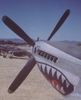
And a detailed close up of a Frazer-Nash FN121.
The Automatic Gun-Laying Turret (AGLT), also known as the Frazer-Nash FN121, was a radar-directed, rear gun turret fitted to some British bombers from 1944. AGLT incorporated both a low-power tail warning radar and fire-control system, which could detect approaching enemy fighters, aim and automatically trigger machine guns – in total darkness or cloud cover if necessary. The radar warning and fire-control system itself was commonly known by the code names Village Inn and "Z Equipment", as well as the serial number TR3548.
It was intended that all Royal Air Force bombers, and other Allied aircraft attached to Bomber Command would have an IFF infra-red nose lamp, which would allow rear gunners to avoid friendly fire. In practice, however, Allied aircraft without lamps often crossed paths with AGLT aircraft and, even when they were fitted and operational, the lamps were not always visible to gunners, for various reasons. As a result, Village Inn was generally used purely as an early warning system. According to the official history of the RCAF during World War II, fully automated "blind-firing" was used by gunners in only four out of every 1,000 sorties. -
This weekends photo.
Messerschmitt Bf-109E-3 fighter from the 6th Staffel of II./JG 77 at an airfield, (Probably Trondheim) in Norway before a sortie.
While stationed in Norway and Denmark in 1940 II./JG 77 claimed some 79 victories, for 6 pilots killed, before leaving in November 1940 for defence duties in Brest, France. -
This weekends extra.
A pilot from the I-2 Cigogne fighter group gets out of his Supermarine Spitfire Mk IX.

This squadron was an amalgamation of the two flights SPA 3 and SPA 103, which had been two of the more illustrious units of the Great War. The unit also distinguished itself during the Battle of France in 1940, but was disbanded that August, following the Armistice.
The squadron was re-formed in July 1941, flying Dewoitine D.520 aircraft. In May 1942, its transfer to French North Africa (AFN) began. Following the Allied Landings in November 1942 (Operation Torch), the French ground and air forces in North-West Africa were joined with the Free French Forces.At the end of 1943, the squadron was embarked in HMS King George V, arriving at RAF Ayr, in Scotland, in early January 1944. There, on 5 January, the former groupe de chasse became 329 Squadron RAF. The squadron fuselage code of 1944-1945 was: "5A-".
After forming at Ayr, the unit moved south to Perranporth, in Cornwall, to begin equipping with Spitfire Vs. By March, these had been replaced by Mark IXs. The squadron became operational on 1 March. The squadron joined No. 145 Wing RAF, composed largely of French squadrons, of the 2nd Tactical Air Force on 14 April. It provided cover for the D Day landings in Normandy in the following June. At this stage, the commanding officer was Lieutenant-Colonel (Wing Commander) Pierre Fleurquin (1905-1971).
In August, the squadron landed in France, under the command of Capitaine (Flight Lieutenant) Jean Ozanne. Its first base in Normandy was at Sommervieu, near Bayeux. As a squadron of a tactical wing, it specialized in ground attack of troop movements, road and river supply convoys and V-weapon launch sites; however, sorties could also include air-to-air combat. Following the move forward into the Low Countries in September, the unit engageded its first jet-propelled opposition in December 1944.
In March 1945, 329 Squadron returned to the UK. It was stationed at Turnhouse, with a detachment at Skeabrae. In May 1945, it was moved to the West of England and fifteen of its aircraft took part in the Victory fly-past in Paris on 14 July 1945. It was transferred to French command, then formally disbanded as an RAF squadron, at Fairwood Common on 17 November 1945.
On the fifteenth, elements moved to Friedrichshafen, via Le Bourget, as EC 1/2 Cigognes (Fighter Squadron 1/2 "Storks"). The unit formed part of the newly reconstituted 2nd Fighter Wing of the French Air Force.